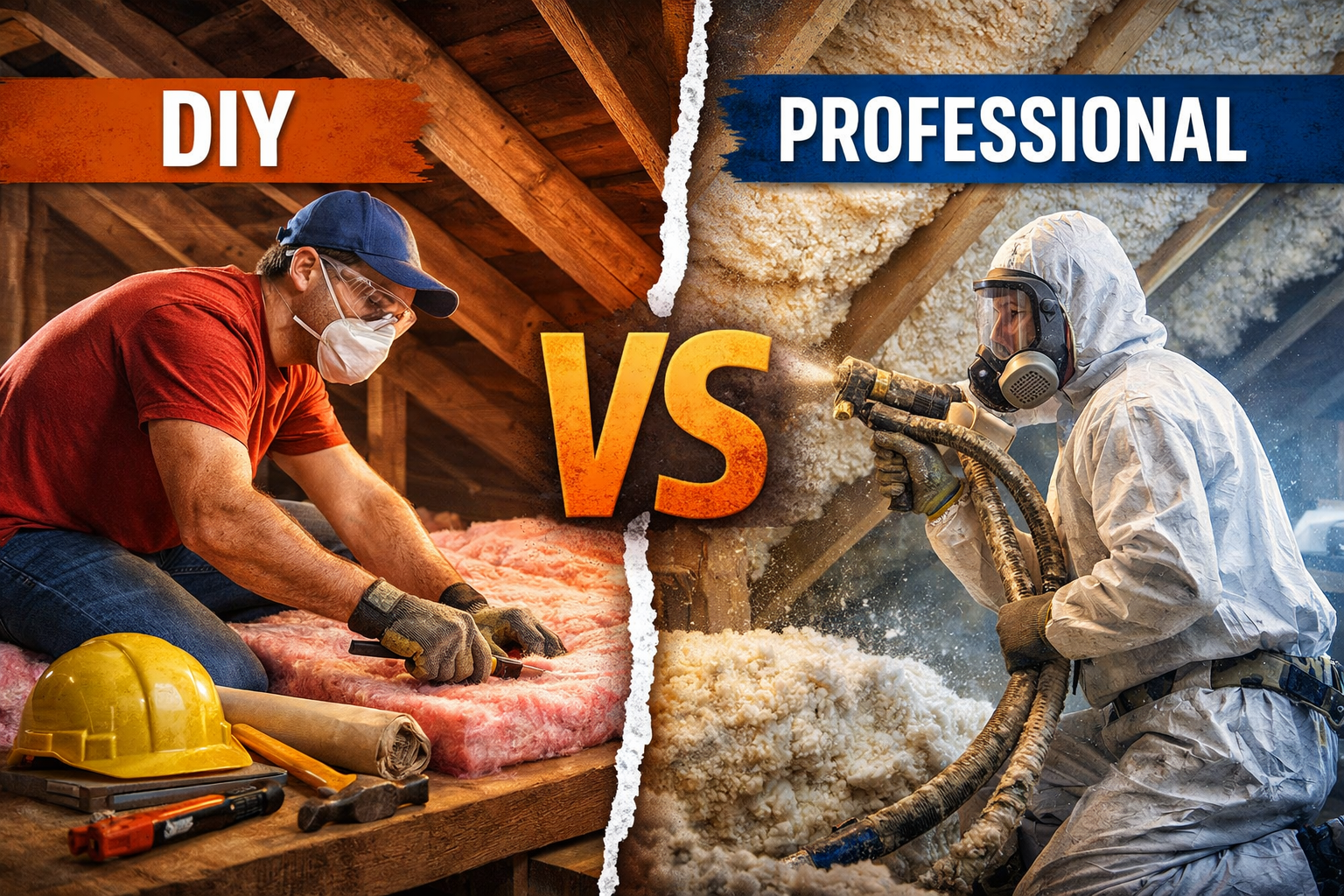
Upgrading attic insulation is one of the smartest ways to improve comfort and reduce energy costs in your home. But many homeowners face the same question before starting: should you hire a professional or handle the job yourself? While DIY insulation can save money upfront, it is not always the best choice for every situation.
The right decision depends on several factors, including your attic condition, insulation type, budget, safety concerns, and long-term goals. In this guide, we’ll explain the differences between DIY and professional insulation so you can make a confident and practical choice.
Understanding What Attic Insulation Really Involves
Attic insulation is more than simply placing material on the floor of your attic. A proper insulation job includes checking ventilation, sealing air leaks, choosing the right insulation type, and ensuring even coverage. These steps are important because insulation works best when installed correctly.
Many homeowners underestimate how detailed the process can be. For example, gaps around pipes, wiring, and vents must be sealed before insulation is added. Without proper preparation, insulation may not perform effectively, even if you install a large amount of it.
When DIY Attic Insulation Makes Sense
DIY insulation can be a good option if your attic is easy to access and in good condition. Homeowners who feel comfortable with basic home improvement tasks can often handle simple projects like adding fiberglass batts or topping up blown-in insulation.
DIY works best when the existing insulation is clean, dry, and free of mold or damage. It’s also suitable if you only need to increase insulation depth rather than replace everything. In these cases, a careful and well-planned DIY project can save money while improving home comfort.
Benefits of Doing Insulation Yourself
One of the biggest advantages of DIY insulation is cost savings. You avoid labor charges and only pay for materials and basic tools. This can be appealing for homeowners working with a tight budget.
Another benefit is flexibility. You can complete the project at your own pace and schedule. Many homeowners also enjoy the satisfaction of improving their homes themselves. For smaller insulation upgrades, DIY can be practical and efficient.
Challenges and Risks of DIY Insulation
Despite its benefits, DIY insulation comes with several challenges. Attics are often tight, dusty, and uncomfortable spaces. Working in high temperatures or poor ventilation can be physically demanding and sometimes unsafe.
Safety risks also include exposure to insulation fibers, electrical wiring, and uneven attic flooring. Incorrect installation can lead to gaps, compression, or ventilation blockages, which reduce insulation performance and may create moisture problems.
When Hiring a Professional Is the Better Choice
Professional insulation services are usually the best option when your attic has complex issues. For example, if insulation is damaged, moldy, or contaminated, it must be safely removed before replacement. This process requires specialized equipment and expertise.
Hiring professionals is also recommended for large attics, difficult access areas, or when installing advanced insulation types like spray foam. Professionals ensure proper air sealing, ventilation, and coverage, which leads to better long-term results.
Advantages of Professional Installation
The biggest advantage of professional installation is quality and reliability. Experts know how to assess attic conditions and choose the right insulation type and thickness for your home. They also ensure proper air sealing, which greatly improves insulation effectiveness.
Another benefit is time savings. A professional team can complete the job quickly and safely, often within a single day. Many companies also provide warranties, giving homeowners peace of mind and protection against future issues.
Comparing Costs: DIY vs Professional
DIY insulation typically costs less upfront because you only pay for materials. However, mistakes can lead to additional expenses later, such as higher energy bills or the need for professional corrections.
Professional installation costs more initially, but it often delivers better performance and long-term savings. Properly installed insulation reduces energy waste, lowers utility bills, and lasts longer, making it a worthwhile investment over time.
Important Factors to Consider Before Deciding
Before choosing DIY or professional installation, consider your attic’s condition, your skill level, and your safety comfort. Think about whether you can handle heavy materials, tight spaces, and proper installation techniques.
You should also evaluate your long-term goals. If you plan to stay in your home for many years, professional installation may provide better value. If your goal is a small upgrade or temporary improvement, DIY could be enough.
Signs You Should Avoid DIY Insulation
Certain situations make DIY insulation risky or unsuitable. If your attic contains mold, pests, moisture damage, or old contaminated insulation, professional help is necessary. These issues require safe handling and specialized equipment.
You should also avoid DIY insulation if your attic has complex wiring, structural concerns, or poor ventilation. In such cases, incorrect work can cause safety hazards or reduce insulation effectiveness.
Making the Right Choice for Your Home
There is no single answer that fits every homeowner. The right decision depends on your budget, attic condition, and comfort with home improvement work. For simple insulation upgrades, DIY can be a practical solution. For complex or large projects, professional installation is often the smarter choice.
Taking time to evaluate your situation carefully will help you avoid mistakes and ensure your attic insulation delivers the comfort and energy savings you expect.
Conclusion
Attic insulation plays a major role in home comfort and energy efficiency. While DIY installation can save money and work well for small projects, it comes with risks and limitations. Professional installation offers better quality, safety, and long-term performance, especially for complex situations.
By understanding the pros and cons of both options, you can choose the approach that best suits your home and your needs.